When Fashion Becomes Part of the Character: Exploring Pantyhose and Style With AI
A person’s first impression of your character may be based on their physical appearance, which is often determined by clothing. The most effective way to identify your character before knowing about his/her speech patterns or actions is through the clothes that he/she wears.
The clothes selected by a particular individual provide us with a lot of information regarding that individual. Regardless of other physical attributes of the individual, what separates the choices made will often be two vastly different views of who he/she is. Pantyhose is one article of clothing that is likely to have a larger influence on overall appearance as well as how a person is perceived.
There are many ways that fashion can be used when developing a fictional character. Fashion choices, styles, and color palettes can all help to shape the way that viewers see the character. There are now specialized formats for creating fictional characters generated by Artificial Intelligence, such as adult-oriented websites with a specific focus on BBW (Big Beautiful Women), such as BBW AI Porn.
Start With the Wardrobe

Sometimes creating clothing may be a good place to begin your character instead of the way she looks.
A designer may decide on what type of outfit he wants his character to wear first and then develop his character from that. A specific dress, skirt, coat, or pair of hosiery will give you the lead for where you want to go next with the rest of the development of your character.
Think About Personal Style
A character’s wardrobe is best when it looks as if it belongs to the character;
simple/practical types of attire make an entirely different impression than the person who loves the bold colors and elaborate fashion of others.
The same can be said for hosiery.
Repeatedly choosing the same color/style of pantyhose creates a familiarity that becomes recognizable.
Use Color to Create Cohesion
An outfit’s overall look can be greatly affected by how the colors of the individual items are related.
Depending on the brightness and contrast of their color, a dark combination or a bright combination of items could provide a very different expression in terms of expressing themselves through dress.
Pantyhose can also relate to other items that it will be worn with to help express itself (the wearer) through color instead of just wearing pantyhose.
A person does not have to wear all matching clothes in order to create a cohesive wardrobe; sometimes a contrasting color is needed in order to give an outfit personality.
Consider Texture and Finish
It is also important to consider that how clothing looks isn’t just about how colors appear, but rather by combining the look of texture, material, pattern/prints, and finish to determine how it is perceived.
An individual’s perception of an article of clothing may be dramatically different depending upon how soft or stiff the article feels when touched, the reflective qualities of the materials used to create the article, if there are prints or patterns on the article, and how transparent the article appears.
You can create very large differences with small adjustments when working with AI and therefore produce entirely new effects.
Match Clothing to the Character’s Lifestyle
Consider how the actual behavior of the character impacts the wardrobe.
An individual that has work at an office likely wears vastly different clothes than someone working primarily outside. The same can be said for a person whose life is composed mainly of attending formal gatherings as opposed to someone who lives a casual lifestyle.
The circumstance provides an explanation for why they have this type of wardrobe. It also allows creators to create multiple outfits based on the character’s circumstances and avoid having to create a new wardrobe every time there are changes to the character.
Give the Outfit a Setting
Using your clothes with an environment will allow you to use them correctly.
Your formal wear may be suitable for many different environments, including a restaurant, office place or social event.
Casuals are better at home, outside, or when traveling.
In addition, things like stockings (pantyhose), accessories, shoes, etc., will provide context that defines your entire wardrobe choice for the total scene.
When all elements within a scene relate to either one time/situation, this usually makes it feel more real.
Try Different Versions of the Same Outfit
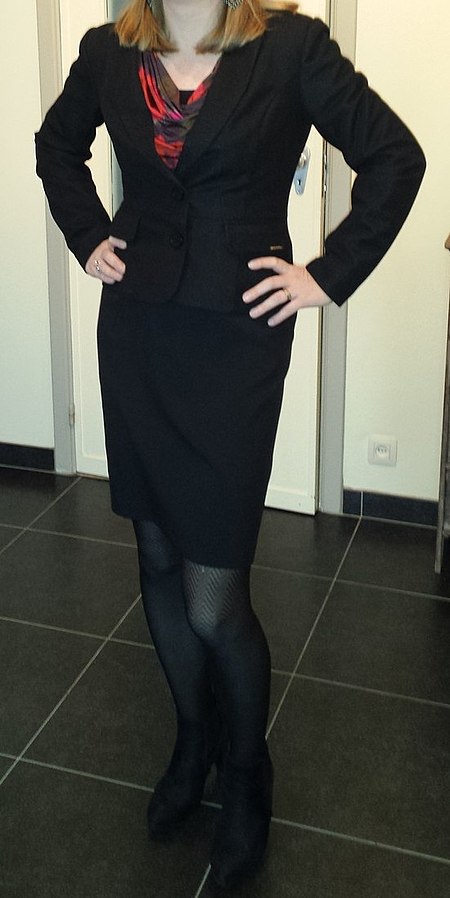
To reduce time spent trying out various combinations, use the original design as the base for all variations and then add your own twist.
By adding one new item (for example, changing the color), it allows you to create multiple new items that have the same basic style.
By adding a new element to your wardrobe (i.e., changing the type of dress or skirt) you may be able to come up with several additional options that are in the same style as each other.
To get away from everything you have tried so far, see what else is available by experimenting with various types of accessories.
Also, you can try testing other forms of hose than the one you selected initially.
Explore Seasonal Styling
A character’s wardrobe is also affected by natural seasonal changes that occur throughout the year.
In autumn or fall, an opportunity to layer with darker colors emerges. In winter, the colder temperatures will allow for heavier fabric selections as well as new ways of layering. In spring, the warmer weather allows for the use of lighter color palettes and simple styling. Summer represents an opportunity for a more minimalist approach to styling.
Each season provides an opportunity to add variety in how a character dresses without changing their overall appearance.
Experiment With Hosiery Choices
Hosiery can be another variable to explore.
Different shades and finishes of pantyhose can affect how the rest of an outfit is perceived.
Rather than deciding that one style must always be used, creators can compare several options and determine which ones fit particular outfits or situations.
This creates variety without requiring the entire character design to change.
Use AI to Test Fashion Ideas
A designer is able to generate multiple options for a potential wardrobe idea (versus having to spend the time) to see which one will be most effective, using their AI image generation software.
You could have a number of alternatives, and then you would be able to determine what the best option was.
Perhaps the way you were thinking about pairing this particular dress with a pair of dark stockings was going to work better than if you had chosen a lighter or brighter stocking.
Or maybe you found out that this particular dress worked better when paired with fewer accessories.
These images allow you to physically respond to an image as opposed to just mentally reacting.
Let Accessories Support the Look
Fashion accessories such as jewelry (necklaces), watches, glasses, hats, scarves, etc. can also be used to create or reinforce an individual’s style.
As fashion accessories are often worn by people on a daily basis, over time these items can become familiar to viewers and associated with a specific individual.
Similarly, clothing is another area that can visually define a person.
Keep the Character Consistent
Experimenting with a wardrobe does not necessarily mean you are changing your personality.
Change in clothing is acceptable as long as you do not lose your basic style or character.
You can have consistency of recognizable features such as hair, facial characteristics, color preferences, accessories, etc. However, this allows the freedom of trying new styles without losing your overall character.
Specialized AI Is Expanding Creative Workflows
AI-generated media has become much more than just generalized image creation.
There are increasing numbers of specialized platforms to support user generated-content based on their interests and community. Example: BBW AI Porn is an example of a niche in fictional AI-generated media; examples of this include character building, fashion design, illustration, animation, and video.
The more specialized AI-generated media is, the more options are available to users when they approach different types of projects.
Save the Combinations That Work
Not every experiment needs to become a finished image.
Sometimes the most useful result is simply an outfit combination that works particularly well.
Save those references.
Keep track of successful colors, dresses, skirts, accessories, pantyhose styles, and environments.
Over time, these references can become a useful wardrobe library for developing the character.
Build a Style That Can Last
A successful character is supposed to be able to be used as the basis of an image that could look different in many ways.
Allowing this kind of flexibility with regard to the way the image looks (e.g., clothes, location, light source, etc.) is what makes it so valuable for large-scale projects.
When you create your design and the character can still be recognized regardless of how you show them in other images, then you have created something much more versatile and usable.
Human Choices Still Guide the Process
AI could provide options for creators who never thought of these options before; however, it is still up to the individual creating the project what they want.
Ultimately, they are responsible for determining the type of clothing that will be worn by their character (as well as which colors go with each other), whether or not to include pantyhose in the outfit and how consistent the character should look.
While the technology provides some possible avenues, it is up to the creator to determine which ones apply to them.
Final Thoughts
Sometimes, a costume doesn’t need a face, a personality profile, or even a whole lot of prompts to start creating your character.
A specific type of dress, certain colors together, a single piece of jewelry, or some patterned pantyhose can all be the beginning of the puzzle. Then you can add in other characteristics such as personality traits, lifestyle, habits, and overall design elements from the rest of the world.
Using AI helps you quickly test those ideas by removing the initial constraint. Now you can test a single element, compare other options, keep the ones that work best, and add onto them all to develop a wardrobe that is custom-made to fit this individual’s persona.
The ultimate result should be more than just multiple costume options. Each option tested and used to visually define the character will contribute to the overall visual definition of who that character is. This will ultimately lead to an evolving sense of style as the character has been defined through at least one drawing.